

The Top 5 Hardest Fires to Put Out: Challenges That Test Firefighting Teams
When firefighters face a standard structure fire, they rely on proven tactics: establish water supply, contain the blaze, and extinguish it systematically. But some fires defy these conventional approaches entirely. These extreme fire scenarios can burn for decades, resist millions of gallons of water, or react violently to traditional suppression methods. Understanding the hardest fires to put out reveals not just the science of combustion, but the critical importance of specialized equipment, rapid response capabilities, and strategic resource deployment.
The five most difficult fires to extinguish—wildfires in remote terrain, oil well fires, metal fires, underground coal seam fires, and chemical plant fires—each present unique challenges that test the limits of firefighting technology and human courage. For fire departments and emergency response teams, understanding these fire types isn't academic—it's essential for proper preparation, equipment acquisition, and training protocols.
1. Wildfires in Remote Terrain
Why They're So Difficult
Wildfires combine multiple firefighting nightmares into a single scenario. Unlike contained structure fires, wildfires spread across vast landscapes with no clear perimeter, consuming everything in their path. What makes them particularly challenging is the terrain factor: these fires often ignite in remote wilderness areas, steep mountainsides, or dense forests where road access is limited or nonexistent.
The fire behavior itself defies prediction. Wind patterns shift, causing fires to change direction suddenly. The blaze creates its own weather systems, generating fire whirls and ember storms that jump containment lines. Dry conditions and drought-stressed vegetation provide unlimited fuel. A wildfire can travel faster than firefighters can retreat, and smoke reduces visibility to near zero while creating toxic breathing conditions.
Accessibility remains the paramount challenge. Traditional fire engines cannot navigate rocky wilderness terrain, creek beds, or steep inclines. By the time firefighters establish access routes, the fire has often grown exponentially. The window for initial attack—when fires are most containable—passes quickly in remote locations.
Real-World Example
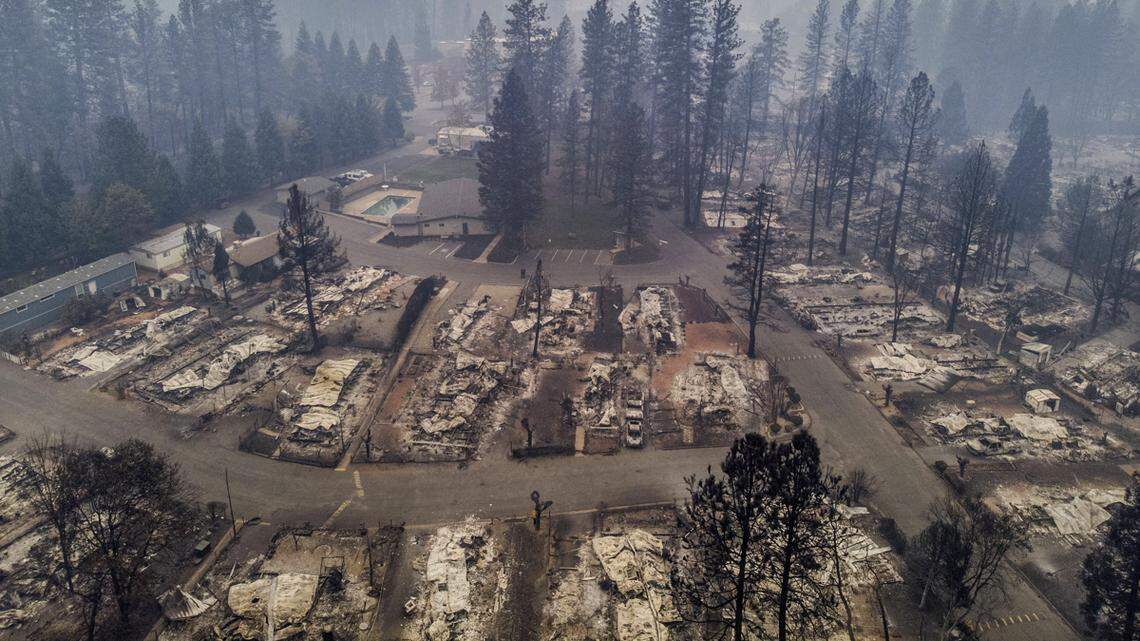
The 2018 Camp Fire in California demonstrated these challenges catastrophically. Igniting in rugged Sierra Nevada foothills, the fire spread with unprecedented speed due to high winds and dry conditions. Within hours, it had consumed the town of Paradise, killing 85 people and destroying over 18,000 structures. Firefighters struggled with access to the fire's origins in steep, brushy terrain. Traditional response vehicles couldn't reach many ignition points quickly enough, and by the time aerial resources arrived, the fire had already created its own weather system, making containment nearly impossible.
Firefighting Methods
Wildfire suppression requires multi-pronged approaches. Aerial resources—helicopters and fixed-wing aircraft—drop water and fire retardant, but they're expensive, weather-dependent, and limited by smoke conditions. Ground crews create firebreaks using bulldozers and hand tools, removing vegetation to starve the advancing flames.
Increasingly, fire departments are recognizing the value of rapid-response, terrain-capable equipment. Mobile firefighting units that can navigate rough wilderness—carrying water supplies, pumps, and foam systems—allow initial attack teams to reach remote ignition points before fires grow unmanageable. These quick-deployment systems can mean the difference between a controlled burn and a catastrophic wildfire.
2. Oil Well Fires
Why They're So Difficult
Oil well fires represent an entirely different category of extreme fire. When an oil well ignites, it becomes a massive blowtorch fueled by petroleum under immense geological pressure. The fire burns at temperatures exceeding 2,000°F, fed by a continuous supply of crude oil or natural gas erupting from deep underground.
Unlike fires with finite fuel sources, oil well fires tap into vast underground reservoirs. The petroleum doesn't just burn—it explodes from the wellhead with tremendous force, creating a jet of flame that can extend hundreds of feet into the air. This pressurized fuel stream makes approach extremely dangerous. The intense heat melts steel and ignites anything combustible within a wide radius.
Traditional water-based suppression is largely ineffective. The oil floats on water, spreading the fire rather than extinguishing it. The extreme temperatures turn water to steam instantly, often without significantly cooling the wellhead. Firefighters must overcome both the fire itself and the mechanical challenge of capping or controlling the pressurized well.
Real-World Example
The Kuwait oil fires of 1991 remain the most dramatic oil well fire scenario in history. When retreating Iraqi forces sabotaged over 700 oil wells, they created an environmental and firefighting catastrophe. The fires burned so intensely that daytime skies turned black, and temperatures in the oil fields reached lethal levels. At their peak, the fires consumed six million barrels of oil daily.
Firefighting teams from around the world converged on Kuwait, but conventional methods proved useless. It took nine months and revolutionary techniques to extinguish all the fires. The operation cost billions and required specialized equipment that could withstand extreme conditions while giving firefighters the reach and protection needed to approach the wellheads.

Firefighting Methods
Extinguishing oil well fires requires unconventional tactics. Firefighters use massive water cannons and cooling systems to reduce temperatures around the wellhead gradually. Some teams have employed explosives to "blow out" fires—using precisely placed charges to disrupt the oxygen supply and snuff the flames.
The most critical phase involves capping the well. Specialized teams must position heavy equipment near the burning wellhead to place a cap or valve that shuts off the petroleum flow. This requires coordination between firefighting efforts and petroleum engineers, often using remote-controlled equipment to minimize human exposure to the extreme conditions.
3. Metal Fires (Class D)
Why They're So Difficult
Metal fires violate everything conventional firefighting teaches. When certain metals—including magnesium, titanium, sodium, and lithium—ignite, they burn at extreme temperatures (often above 3,000°F) and react violently with water, the firefighter's primary tool.
Adding water to a metal fire can cause explosive reactions. The intense heat breaks water molecules apart, releasing hydrogen gas that ignites immediately. This creates fireballs and dangerous pressure waves. Some burning metals also react with carbon dioxide, rendering standard fire extinguishers not just ineffective but dangerous.
These fires are self-oxidizing, meaning the burning metal generates its own oxygen supply through chemical reactions. Smothering tactics that work on ordinary fires fail against metal fires. The fire continues burning even when separated from atmospheric oxygen, eating through containment materials and resisting traditional suppression approaches.
Metal fires also create toxic smoke and fumes. Burning magnesium, for example, produces magnesium oxide particles that can cause severe respiratory damage. The bright white light from burning metals can cause temporary or permanent vision damage to unprotected observers.
Real-World Example
In 2019, a magnesium fire at a recycling facility in Pennsylvania demonstrated these unique challenges. When magnesium scrap ignited, the fire burned so intensely it melted through concrete floors. Firefighters arriving on scene initially attempted to use water, which caused violent reactions and expanded the fire. The blaze burned for over four days despite continuous suppression efforts.
The fire department had to bring in specialized Class D extinguishing agents and work with materials scientists to develop a suppression strategy. Traditional fire engines proved inadequate; the department needed specialized application equipment and had to establish multiple supply chains for dry powder extinguishing agents not normally stocked.

Firefighting Methods
Metal fires require Class D extinguishing agents—specialized dry powders that smother the fire and absorb heat without reacting with the burning metal. Common agents include dry sand, sodium chloride, or proprietary powders formulated for specific metals.
Application method matters critically. The extinguishing agent must completely cover the burning metal and be applied gently to avoid disturbing the material and increasing surface area exposed to oxygen. Firefighters often use shovels or specialized low-pressure applicators rather than forceful streams.
Prevention and rapid response provide the best defense against metal fires. Facilities handling combustible metals need dedicated firefighting equipment stationed nearby, and first responders must identify these fires immediately to avoid dangerous suppression tactics. The faster specialized agents reach the fire, the more manageable it remains.
4. Underground Coal Seam Fires
Why They're So Difficult
Underground coal seam fires represent perhaps the most persistent fire type on earth. These fires burn in coal deposits deep below the surface, often igniting through spontaneous combustion, lightning strikes, or surface fires that penetrate underground. Once established, they can burn for decades or even centuries.
The primary difficulty is access—the fire burns in an environment firefighters cannot reach. Traditional suppression methods require approaching the fire, but underground fires exist in networks of coal seams, abandoned mines, and natural fissures that extend for miles. The coal itself provides virtually unlimited fuel, and oxygen reaches the fire through cracks, vents, and porous soil.
These fires move unpredictably underground, following coal seams in directions that surface observation cannot determine. The ground above becomes unstable as coal burns away, creating subsidence risks and sudden collapses. Toxic gases—including carbon monoxide and sulfur dioxide—seep to the surface through vents, creating health hazards across wide areas.
Detection presents another challenge. Underground fires often smolder invisibly for years before surface signs appear. By the time smoke vents appear or ground temperatures rise noticeably, the fire has already established itself extensively underground.
Real-World Example
The Centralia mine fire in Pennsylvania has burned since 1962—over six decades—and may continue for another 250 years. What began as a trash fire that ignited an exposed coal seam evolved into an underground inferno that hollowed out the town above it. The ground became too hot to walk on, toxic gases infiltrated homes, and sinkholes swallowed portions of streets.
Despite multiple suppression attempts, including excavating burning material and injecting fire-suppressing materials underground, the fire proved unstoppable. The federal government eventually relocated Centralia's residents and condemned the town. The fire continues burning today beneath a near-abandoned landscape, a testament to the impossibility of extinguishing certain underground fires.

Firefighting Methods
Underground coal fires rarely get "extinguished" in the conventional sense. Instead, firefighters attempt containment and control. Strategies include excavating burning material to remove fuel, injecting water or slurry underground to cool the fire zone, or installing barriers to limit oxygen flow.
Some operations use nitrogen injection or carbon dioxide flooding to displace oxygen in underground spaces. Others attempt to seal all surface vents and openings, essentially entombing the fire and starving it of oxygen over decades.
The most practical approach often involves monitoring and managing the fire rather than eliminating it. Firefighters establish perimeters, prevent expansion, protect surface structures, and ensure toxic gases don't threaten populations. This acceptance of a long-term management strategy rather than quick suppression reflects the unique nature of these fires.
5. Chemical Plant Fires
Why They're So Difficult
Chemical plant fires combine extreme heat with chemical reactivity, creating scenarios where firefighting efforts can actually worsen the situation. These facilities contain hundreds of different chemicals, many stored in proximity to one another. When fire breaks out, it can trigger chain reactions, explosions, and the release of toxic substances.
The core challenge is chemical incompatibility. Water that safely extinguishes wood fires can react violently with certain industrial chemicals, causing explosions or toxic gas production. Foam suppressants effective on petroleum fires may break down when exposed to acids or oxidizers. Each chemical requires specific suppression agents, but a chemical plant fire typically involves multiple substances simultaneously.
Heat causes chemical containers to fail, releasing contents that feed the fire or create new hazards. Tank explosions can propel burning chemicals hundreds of feet, starting new fires beyond containment lines. Toxic smoke from burning chemicals creates evacuation zones that prevent firefighters from approaching the fire's core.
Firefighters also face an information problem. Chemical plants contain complex inventories that change regularly. Determining exactly what's burning—and what nearby chemicals might ignite next—requires accessing facility records during chaotic emergency conditions. The wrong suppression tactic applied to the wrong chemical can transform a manageable fire into a catastrophe.
Real-World Example
The 2019 Intercontinental Terminals Company fire in Deer Park, Texas, illustrated these challenges dramatically. When a storage tank containing naphtha and gasoline components ignited, the fire spread to adjacent tanks holding different petrochemicals. The blaze burned for four days, creating a massive smoke plume visible from space.
Firefighters initially used foam suppression, but the fire's intensity and the number of involved tanks overwhelmed these efforts. Some chemicals required cooling rather than foam application. The fire generated such intense heat that water streams evaporated before reaching the flames. Secondary explosions repeatedly set new tanks ablaze, forcing firefighters to retreat and reassess their approach multiple times.
The incident required coordination between local fire departments, industrial firefighting specialists, chemical engineers, and environmental agencies. Specialized foam supplies had to be shipped from across the country. The complexity of controlling the fire while preventing environmental contamination and protecting nearby residential areas made it one of the most challenging industrial fire operations in recent U.S. history.

Firefighting Methods
Chemical plant fires demand pre-incident planning and specialized resources. Firefighters need detailed facility maps showing chemical storage locations, quantities, and safety data sheets for each substance. The initial response focuses on identifying what's burning and what might be threatened.
Suppression tactics vary by chemical involved. Some areas require foam application, others need dry chemical agents, and some demand simple cooling with water from safe distances. Firefighters often establish defensive perimeters, protecting unaffected areas while allowing involved sections to burn under controlled conditions.
Industrial facilities increasingly maintain their own firefighting teams trained specifically for chemical fire scenarios, equipped with specialized protective gear and suppression agents. When fires exceed on-site capabilities, mutual aid responses bring together multiple agencies with complementary resources. The key to success is rapid identification of involved chemicals and immediate access to appropriate suppression methods—capabilities that require both equipment and extensive training.
The Common Thread: Preparation and Equipment Matter
These five fire types share common challenges that extend beyond their specific characteristics. Each requires rapid response before the fire escalates beyond containment. Each demands access to the fire's location despite terrain, environmental, or safety obstacles. Each needs specialized equipment that standard fire apparatus cannot provide.
For fire departments and emergency response agencies, understanding these extreme fire scenarios drives equipment and training decisions. The wildfires, oil well fires, metal fires, underground fires, and chemical fires discussed here represent the upper edge of firefighting challenges—but they're not rare anomalies. As industrial operations expand, drought conditions persist, and development pushes into wildland areas, these difficult fires become increasingly common.
Modern firefighting requires versatile, rapidly deployable resources that can handle multiple fire types across diverse terrain. Mobile units that combine off-road capability with substantial water capacity, pumping power, and foam systems allow firefighters to reach difficult fires during that critical initial attack window. The investment in proper equipment—including terrain-capable firefighting systems—directly impacts outcomes when facing the hardest fires to put out.
FAQ
Q: What equipment is most effective for reaching wildfires in remote or rugged terrain?
A: UTV-mounted fire skids and mobile firefighting units provide the best combination of off-road capability and firefighting capacity for remote wildfires. These systems can navigate steep terrain, creek beds, and forest trails that traditional fire engines cannot access, allowing crews to reach ignition points during the critical initial attack window when fires are most containable.
Q: Can standard firefighting equipment handle all five types of difficult fires?
A: Standard equipment is insufficient for these specialized fire scenarios. Metal fires require Class D dry powder agents, chemical fires need specific suppression methods based on the burning material, and remote wildfires demand terrain-capable delivery systems. Departments need versatile equipment that can carry multiple suppression agents and access challenging locations, or maintain specialized apparatus for specific fire types.
Q: How quickly do firefighting teams need to respond to wildfires before they become uncontrollable?
A: The initial attack window for wildfires is typically 10-20 minutes from ignition in dry, windy conditions. During this brief period, small fires can still be contained with relatively modest resources. After this window, fires often grow exponentially, requiring massive resource commitments and potentially becoming unstoppable until weather conditions change or fuel sources are exhausted.
Q: What are the risks of fighting metal fires or chemical fires with improper suppression methods?
A: Using water on metal fires causes violent explosive reactions that spread burning material and create toxic gases. Applying the wrong suppression agent to chemical fires can trigger explosions, toxic gas releases, or accelerate the fire. These mistakes have killed firefighters and caused fires to escalate from manageable incidents to catastrophic events requiring evacuation of surrounding areas.
Q: How much does it cost fire departments to inadequately prepare for hard-to-extinguish fires?
A: The costs of inadequate preparation far exceed equipment investments. A wildfire that escapes initial containment can require multi-million dollar suppression operations, destroy property worth hundreds of millions, and result in liability claims. Industrial fires allowed to escalate cause production losses, environmental cleanup costs, and community evacuations that dwarf the investment in proper firefighting equipment and training.
Q: What makes mobile firefighting units valuable for multiple fire types?
A: Mobile units mounted on UTVs or similar platforms provide versatility that traditional apparatus cannot match. They reach remote wildfire locations, navigate industrial facilities during chemical fires, and rapidly deploy to incidents before they escalate. Quality mobile systems accommodate different suppression agents, deliver substantial water volumes, and position firefighters safely while maintaining mobility—critical advantages across all difficult fire scenarios.


